Then I gave it my tone of voice file, my content ideas, and three examples of posts I liked. I gave it a specific angle. It sounded like me.
Same tool. Completely different result.
Context is everything. I covered this in depth in my AI prompt engineering for PPC guide. Your campaign data, your brand guidelines, your past content, your client's specific situation.
The more context you feed, the better the output.
I keep files that Claude reads before it writes anything. Voice rules. Formatting preferences.
Real examples of my writing. It reads all of that before it types a single word.
Vinod my co-founder learned this the hard way. He asked Claude to analyze campaign data without telling it what "good" looked like for his clients.
The analysis was correct but completely useless. Once he added context about target ROAS, budget limits, and client goals, the output changed completely. He could send it straight to clients.
Skill 6: Learn Other AI Tools to Make Your Workflows Better
Claude Code is my foundation. But I use other tools to make my workflows stronger.
Fireflies records and transcribes every meeting I have. I do not take notes anymore. The transcript is there.
Claude pulls it, reads it, finds what matters.
For image generation, I use dedicated tools that create ad creatives and blog covers. I give them a JSON prompt with exact specs: lighting, mood, composition, format.
Three variants come back. I pick one.
For market research, I scrape Reddit with custom tools. Real complaints from real people in real time. Not survey data from 2024.
The skill is not knowing every tool. It is knowing which tools plug into your workflow and make the whole thing faster.
One tool does the thinking. Other tools feed it data or handle the output.
I test a new tool maybe once a month. If it saves me time, it stays. If it adds complexity without saving time, it goes.
Most tools go.
Skill 7: Use Voice Instead of Typing
This one sounds small. It changed my entire day.
I use Whisper for voice-to-text. Once you get used to it, you never type a sentence again in your life.
Vinod my co-founder debated paying for it for months. Now it is free on most platforms.
My daily workflow is largely voice. I dictate to Claude while doing other things.
Walking. Cooking. Sitting on the couch.
The AI listens, processes, executes.
This is not about speed, even though it is faster. It is about thinking differently.
Typing makes you edit yourself. Talking makes you think out loud. The ideas come more naturally.
I dictate my content ideas. I talk through my strategy. I give Claude instructions by speaking, not typing.
It feels like having a conversation with a colleague who never forgets anything.
For marketers who create content every day, this skill alone saves an hour.
The Real Skill Behind All Seven
Every article about AI skills lists "prompt engineering" and "data literacy." Those sound like a university course.
The real skill is simpler. It is the willingness to look at how you work, admit what is slow, and build something better.
I did not learn AI skills from a course. I learned them from being frustrated with my Monday mornings.
Every automation I built started with "I am tired of doing this."
65% of marketing teams now have dedicated AI roles. If you manage a team, read my getting your marketing team to actually adopt AI. The marketers filling those roles will not have the best certificates.
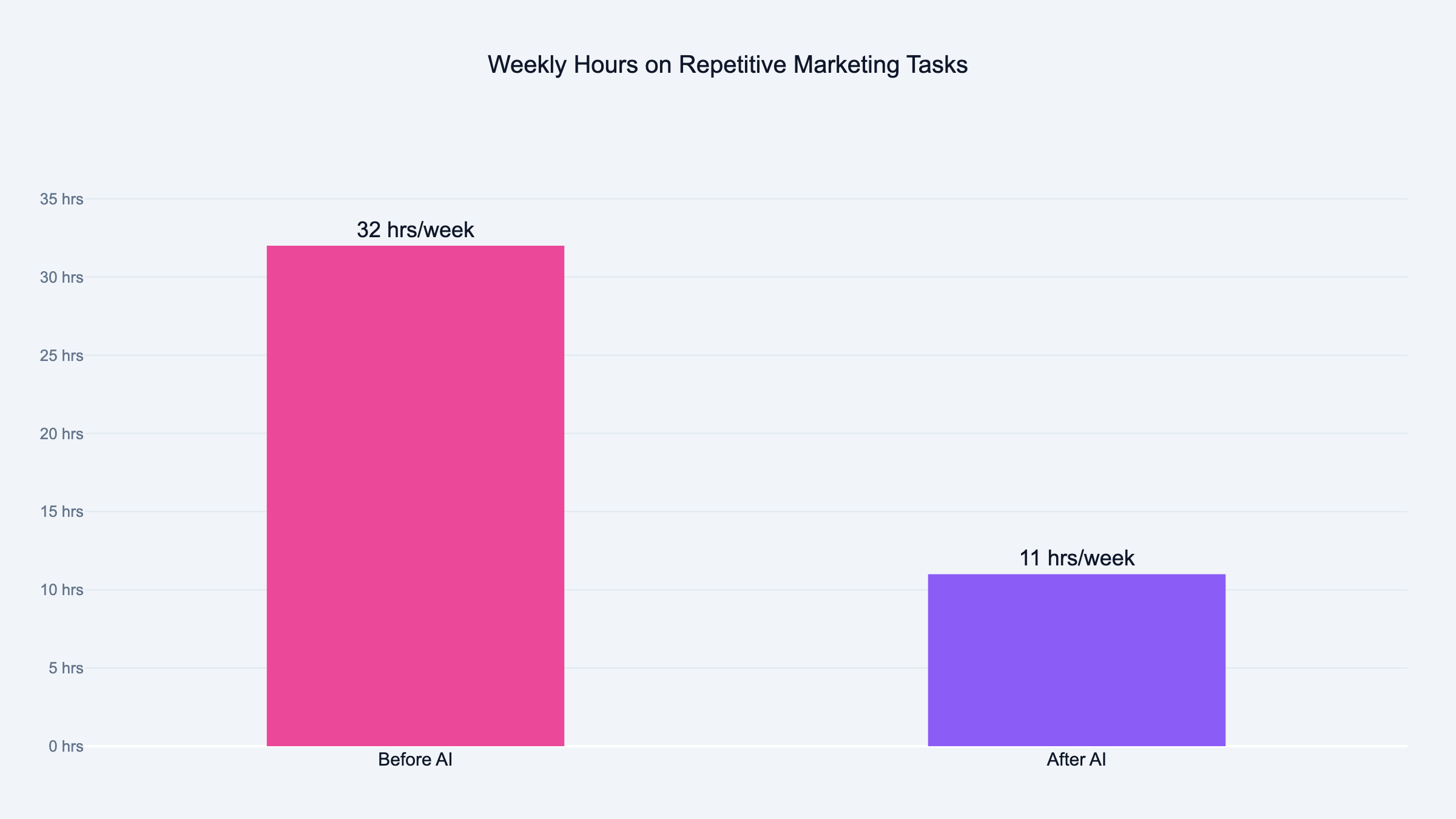
They will be the ones who already built workflows that save their team ten hours a week.
Start with one task. Break it into steps. Open one tool.
Build it.
Frequently Asked Questions
What AI skills do marketers need in 2026?
The most important skill is identifying repetitive tasks in your workflow and automating them. Beyond that, marketers need to give AI proper context and build reusable workflows.
The technical side is simpler than people think. You do not need to code.
Do marketers need to learn coding for AI?
No. I built my entire AI workflow without writing a single line of code. Tools like Claude Code let you write instructions in plain English.
The skill is clear thinking, not coding. If you can describe what you want step by step, you can build AI workflows.
Will AI replace marketing jobs?
AI replaces tasks, not jobs. The marketers who lose their roles are the ones doing only repetitive work that AI handles better.
The ones who keep their roles use AI to do that work faster. They spend their time on strategy and creative thinking.
How long does it take to learn AI marketing skills?
I went from zero to a working automated workflow in one weekend. That covered one specific task.
Building a full system took about three months of steady work. Not full-time. An hour here, an hour there.
What AI tools should marketers learn first?
Pick one large language model and go deep. I use Claude Code. Others prefer ChatGPT or Gemini.
The specific tool matters less than the depth you build with it. After your main LLM, add tools that feed it data.
Is prompt engineering a real skill for marketers?
Yes, but not the way most people teach it. Prompt engineering is not about memorizing magic phrases.
It is about giving AI the right context. Feed it your data, your examples, your brand voice, your specific situation.
How do I start using AI in my marketing workflow?
Write down every task you do in a week. Circle the ones that are repetitive, take more than 30 minutes, and follow the same pattern.
Pick one. Break it into small steps. Open your LLM of choice and build it.
What is the difference between using AI tools and building AI workflows?
Using AI tools means typing prompts one at a time and getting one-off results. Building AI workflows means creating a system that runs automatically.
One is a conversation. The other is a machine. The machine saves you hours.
Which marketing tasks are easiest to automate with AI?
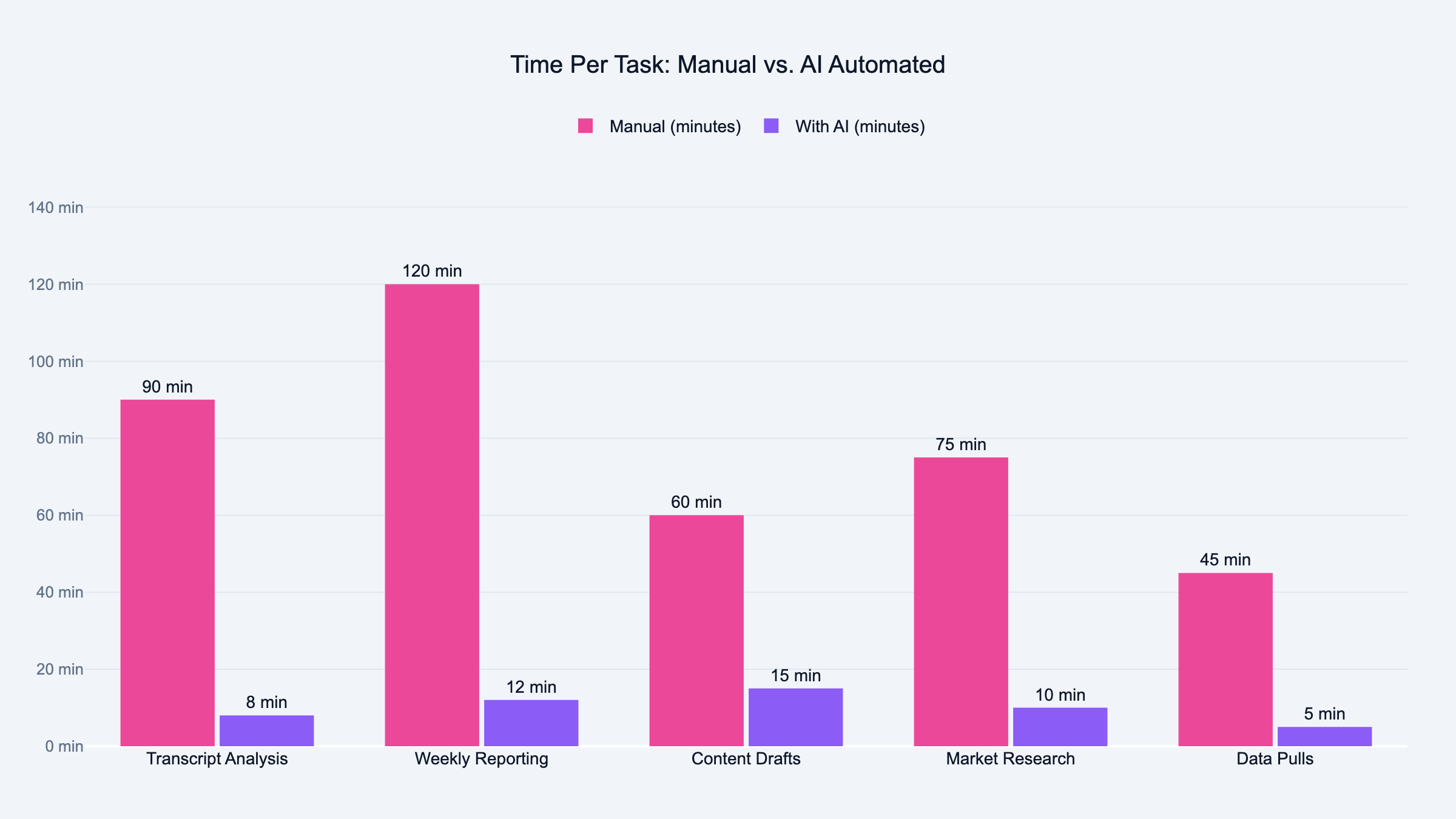
Transcript analysis from client calls. Weekly reporting. Data pulls across platforms.
Content drafts. Market research from forums.
Start with reporting or transcript analysis. Those follow clear patterns and give you quick wins.
How do I future-proof my marketing career with AI?
Build workflows that save your team time. Document them. Share them.
The marketers who become essential are the ones who make everyone around them faster. Go deep with one system. The skills transfer when new tools come out.