One study analyzed over 30 million AI citations. Reddit accounts for 21% of all sources in Google AI Overviews. AI pulls from wherever the clearest, most trusted answer lives.
Your agency blog can compete. But it needs to be one of several places your voice shows up.
Step 8: Track AI Citations Manually Every Week
No tool needed for this. 15 minutes, once a week.
Open ChatGPT and Perplexity. Type the five questions your clients ask most. Write down whether your content appears as a source. If something else appears, note what it is and why it might be getting cited instead.
I keep a simple spreadsheet for this. Date, question, source cited, notes. After eight weeks you will see patterns. You will know exactly which pages are working and which ones need another pass.
Step 9: Change What You Measure
Rankings in Google alone will not tell you if this is working. You need two more numbers.
First: track direct traffic as a percentage of total. When AI answers bypass your site, direct traffic and newsletter sign-ups become the real measure of brand strength. If that number is growing, AI search is working for you even when organic clicks stay flat.
Second: track brand mention share. Ask ChatGPT "who are the best agencies for X" every month. Log whether your name appears and how high. This is the new version of keyword ranking. I wrote about proving marketing ROI to clients with these exact metrics.
Step 10: Repeat on the Next Batch
Once citations start appearing on your first five pages, move to the next five.
Do not do everything at once. The feedback loop is the point. You update a page, you track whether it gets cited, you learn what works in your specific niche, and you apply that to the next batch.
The agencies making the most progress are not the ones who overhauled everything in one sprint. They are the ones running a consistent weekly cycle. If you want the full playbook on building an AI-powered agency, start with how to build an AI-powered marketing agency.
Frequently Asked Questions
How much organic traffic are digital marketing agencies losing to AI search?
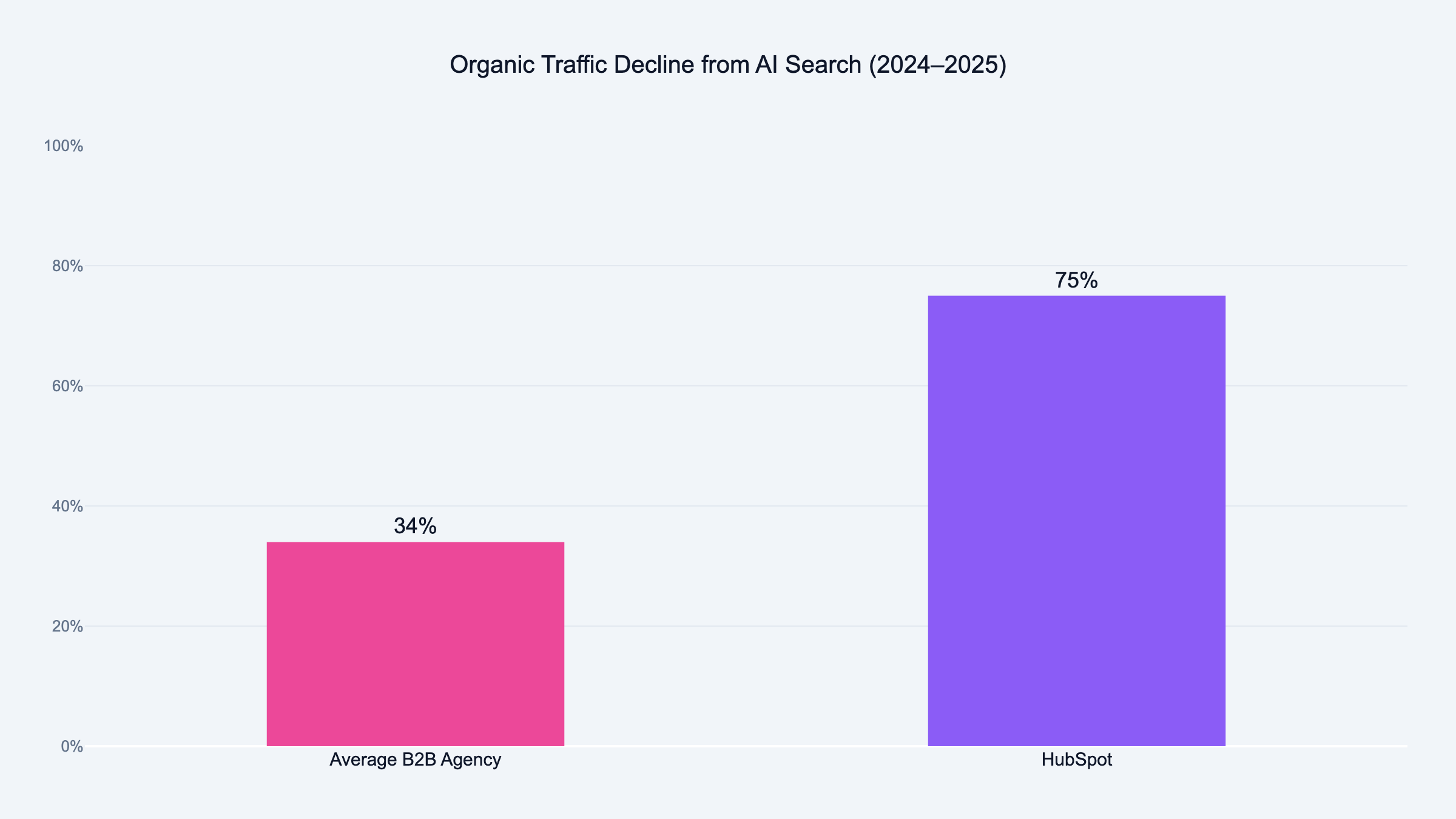
The numbers vary by industry but the direction is the same everywhere. By 2025, 73% of B2B websites saw significant traffic losses with an average decline of 34% year-over-year.
Agencies focused on informational content got hit hardest. Some sectors saw drops of 15-64% since AI Overviews launched at scale in 2024.
What is GEO and why do agencies need it now?
GEO stands for Generative Engine Optimization. It is the practice of structuring content so AI systems pull from it when generating answers. ChatGPT, Perplexity, and Google AI Overviews all work this way.
Traditional SEO got you to the top of Google. GEO gets you cited inside the AI answer, where the click never happens but the brand impression does. Agencies that skip it are invisible to half their potential clients.
How do I know if AI Overviews are hurting my organic traffic?
Open Google Search Console and look for pages where impressions are flat or growing but clicks are dropping. That gap is AI answering the question before anyone clicks through.
The effect is largest on informational pages. Product pages and service pages are less affected because AI systems send those queries to transactional results.
Is traditional SEO still worth investing in for agencies?
Yes. GEO and traditional SEO are not either/or. AI Overviews strongly favor pages that already rank well in traditional search.
Strong domain authority, clean site structure, and quality backlinks feed directly into AI citation probability. Agencies that abandon SEO for GEO end up with neither.
How long does GEO take to show results?
Faster than most agencies expect. I moved the answer to the top of five pages with no other changes. Three appeared in Perplexity answers within six weeks.
Consistent citation takes longer. Building entity authority across multiple sources is a three to six month process, not a one-page fix.
What types of content get cited by AI systems most often?
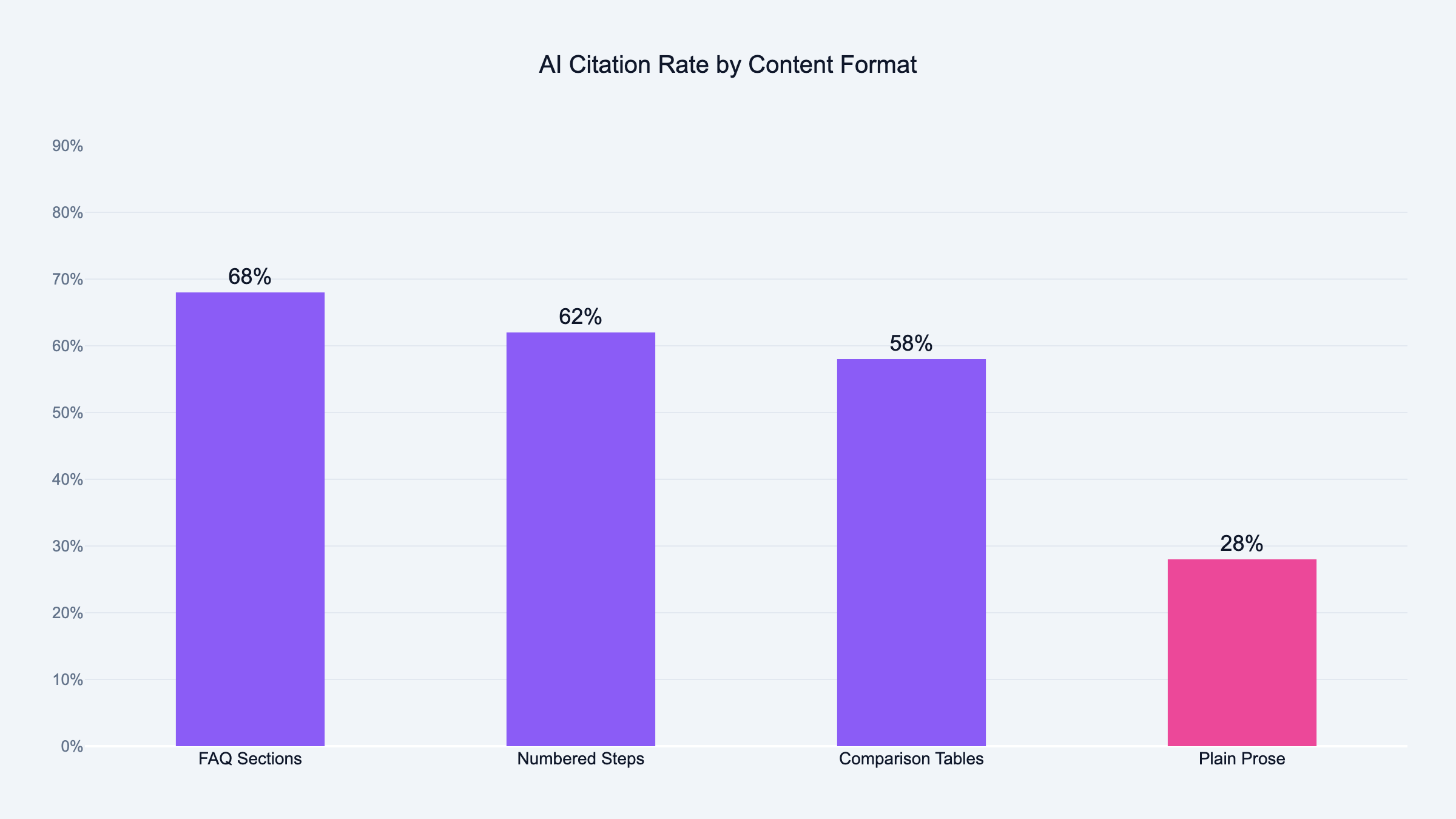
Structured content outperforms plain prose. FAQ sections, numbered steps, comparison tables, and clearly labeled sections all raise citation rates.
Specific, numbered claims get cited at 40% higher rates than vague statements. "Our reporting time dropped from 8 hours to 90 minutes" gets cited. "Our reporting improved significantly" does not.
Do agencies need a separate GEO strategy or can they adapt their existing SEO?
No separate strategy needed. The changes are additions to what you already do, not a replacement.
Move the answer to the top of existing pages. Rewrite generic headings as questions. Add FAQ sections. Add structured data. The SEO foundation stays the same. The formatting layer changes.
How do agencies measure AI search visibility without paid tools?
Search your core questions in ChatGPT and Perplexity weekly. Log whether your content appears as a source.
That manual check takes 15 minutes and is more useful than most paid tools right now. Track it in a simple spreadsheet: date, question, who got cited.
What is the biggest difference between ranking on Google and getting cited by AI?
Google rewards relevance signals: keywords, backlinks, click-through rates. AI systems reward clarity and structure.
They pull the most direct, well-organized answer to a question, no matter the domain authority behind it. A well-structured page from a smaller agency can beat a vague answer from a major publication.
Should agencies be worried about AI replacing their organic traffic entirely?
Worried, no. Prepared, yes.
The shift is real but not total. Paid search, direct traffic, referrals, and email remain strong channels. The agencies holding ground treat AI search the same way they treated mobile ten years ago. A new surface to show up on.
Start with your top ten pages. Get those cited. Build from there.